
Official Seminole County Population Reports
The Sheriff's reports page is the source of record for jail counts. It publishes a Daily Inmate Population archive and a separate Daily Booking Report archive. The population archive gives a point-in-time count of who is held, while the booking archive shows the flow of new arrests into the jail. Together they tell two different stories: how many are inside, and how many arrive each day.
The reports archive, shown below from the Seminole Sheriff reports page, links the daily booking and daily population reports.
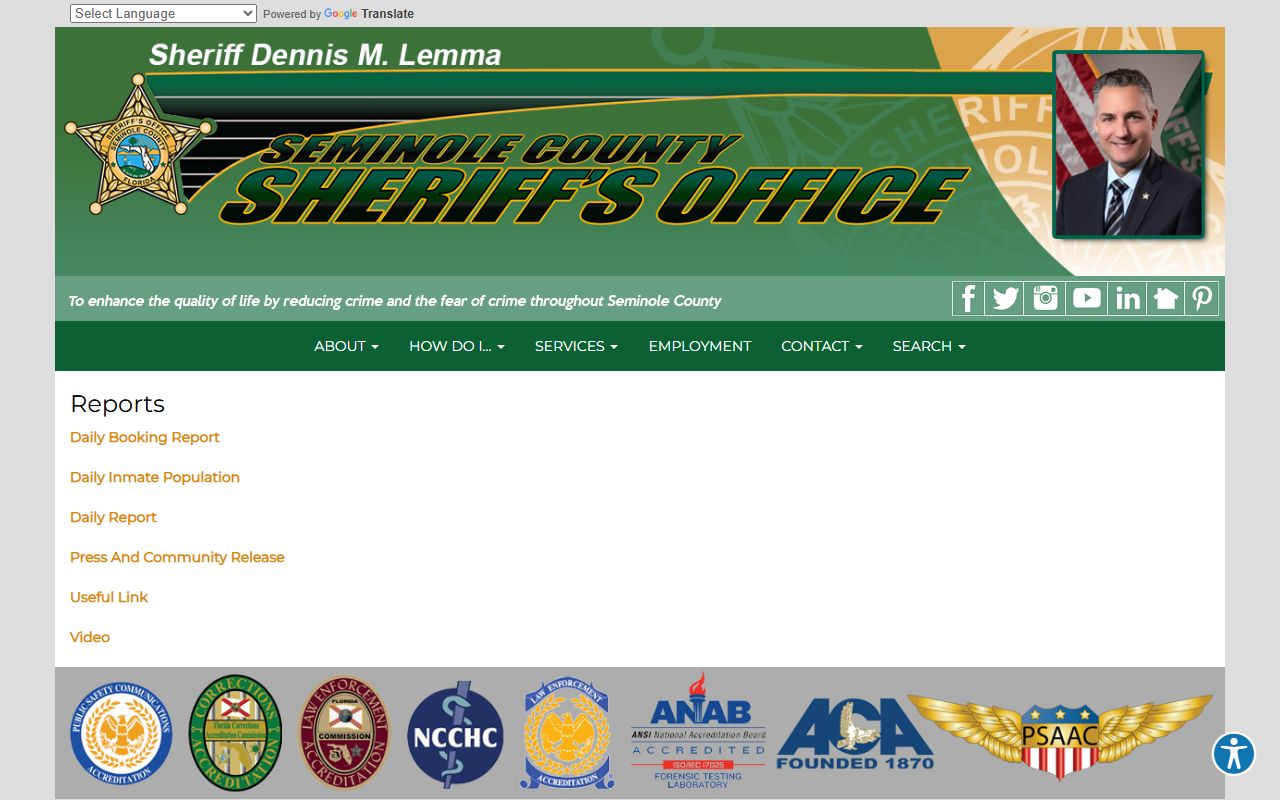
The Daily Inmate Population archive is the page to bookmark for current and past counts.
The John E. Polk Correctional Facility
All county jail population is held at one main facility, the John E. Polk Correctional Facility at 211 Eslinger Way in Sanford. The Sheriff's Office runs it as part of the Eslinger Way justice campus. The jail holds pretrial detainees, people on local charges, and those serving short county sentences. People sentenced to state prison are moved to the Florida Department of Corrections, so they leave the county count.
| Facility | Address | Capacity Note |
|---|---|---|
| John E. Polk Correctional Facility | 211 Eslinger Way, Sanford, FL 32773 | Official PREA audit materials reference 19 housing units and an 812-bed capacity after an added area; confirm the current figure with the Sheriff. |
The capacity number above comes from official audit references, but the Sheriff's main pages did not post a current capacity. Treat it as a guide and verify the current count in the latest report.
Daily Booking Versus Daily Population
These two reports answer different questions, and mixing them leads to wrong conclusions. The Daily Inmate Population is a snapshot of how many people are held on a given day. The Daily Booking Report counts how many people were booked in. A jail can book many people in a day while its overall population barely moves, because others are released the same day.
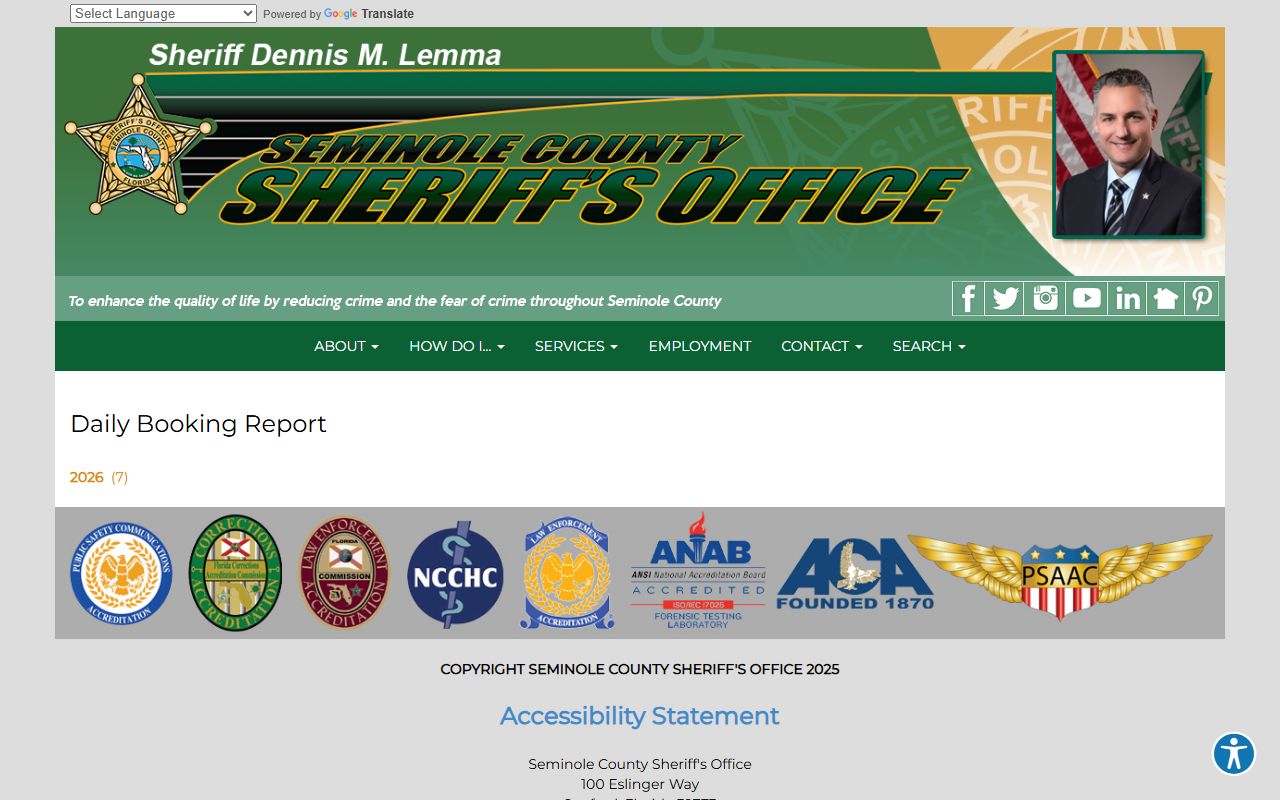
For a true count of who is inside, use the population report. For arrest activity, use the booking report. The booking archive on the Sheriff's site, shown below, tracks that daily flow.
How to Read the Population Reports
The reports are organized by year, and each year holds a set of dated reports. The population archive observed listings for 2024, 2021, and 2020, while the booking archive showed 2026 entries. Open the year, then the date, to see the count for that day. Because the reports are point-in-time, a single date is a snapshot, not an average.
To gauge a trend, compare several dates across the year rather than reading one report. The Sheriff's annual report and strategic plan can add context on bookings, programs, and staffing, though those documents need a report-by-report read to pull exact figures.
Note: A single daily report is a snapshot, so review several dates before drawing a conclusion about a trend.
Why the Portal Count Differs
People often try to count the jail by running the custody portal, but that number is not a population report. The portal result count changes in real time based on the search criteria. An unfiltered current-inmate search comes closest to a live count, but any filter, a name, an age, or a date, shrinks it. The portal is built to find a person, not to total the population.
So if a portal search returns a different number than a daily report, that is expected. The official daily population report is the figure to cite, not a portal result.
National and State Context
Local numbers mean more with context. The Bureau of Justice Statistics publishes national jail data, including how many people are held pretrial versus sentenced and how jail populations move over time. BJS is the official federal source for these trends and a good benchmark for any county jail count.
The BJS site, shown below from bjs.ojp.gov, hosts national jail and corrections reports.
Use BJS for the national picture and the Sheriff's reports for the Seminole-specific count. The two together let you compare the local jail to broader trends without guessing.
Pretrial and Sentenced Population
A jail population is a mix of groups. Most county jails hold a large share of pretrial detainees, people awaiting trial who have not been convicted, alongside those serving short sentences and people held on holds or warrants. The exact Seminole split is not posted in a simple public table, so the daily population report and any annual report are the places to look for local detail.
| Population Group | What It Means |
|---|---|
| Pretrial | Held awaiting trial, not yet convicted. |
| Sentenced | Serving a county sentence after conviction. |
| Holds and warrants | Held for another agency or on a warrant. |
National BJS data shows pretrial detainees make up a large part of county jail populations, which is useful background when local splits are not published.
Average Daily Population
Average daily population, often shortened to ADP, is the figure most analysts use to size a jail. It is the mean count across a period rather than a single day. The Sheriff's daily reports give the raw counts that an ADP is built from, but the office did not post a packaged ADP figure on the pages reviewed. To estimate one, you average the daily population counts across the dates you care about.
ADP smooths out the spikes that a single day can show. A weekend or a holiday can run higher or lower than a typical Tuesday, so one date can mislead. Pulling a week or a month of daily reports gives a far steadier number than any single snapshot.
Demographic and Medical Population
Jail populations also break down by demographics and by medical and mental-health need. The custody portal lists age, gender, and race on each profile, which is how those fields are tracked at the individual level. A countywide demographic table is not posted in a single public view, so the daily reports and any annual report are the official places to look for local detail.
Medical and mental-health needs shape jail operations too. The facility runs healthcare services and uses classification to house people safely. National BJS data offers context on how common these needs are across jails, which helps when local figures are not broken out. Always mark which numbers are Seminole-specific and which are national context.
Population Trends to Verify
A clean five-year trend line for Seminole is not posted in a single table. The archive showed population report years for 2024, 2021, and 2020, but not a full year-by-year set in one view. To build a trend, you would open individual daily reports across each year and record the counts. That is the honest method, since the official source does not publish a packaged multi-year chart.
Be cautious with third-party "jail population" estimates. They are often stale snapshots. The Sheriff's dated reports are the current, official figures, and they should anchor any trend you cite.
Searching for an Inmate by Name
This page is about counts, not individuals. To look up a specific person in custody, use the Sheriff's custody portal instead. The Seminole County inmate records page covers the roster search, booking fields, bond, and visitation in full. For a released person, the released inmates page lists VINELink, the state DOC search, and the federal BOP locator.
Where the Data Comes From
Every figure here should trace to an official source. County counts come from the Sheriff's Daily Inmate Population reports. Booking activity comes from the Daily Booking Reports. National and pretrial context comes from the Bureau of Justice Statistics. Capacity references come from official audit materials, with a clear caveat to verify the current number. Keeping each figure tied to its source is what separates real data from a guess.