
The Role of the Seminole County Court
Florida runs two trial courts, and the County Court is the limited one. It handles matters set by statute, mostly the everyday cases that move in high volume. Most judge-tried trials in Florida happen at the county-court level, because that is where misdemeanors, traffic, and small claims land. The County Court shares the same buildings and the same Clerk as the Circuit Court.
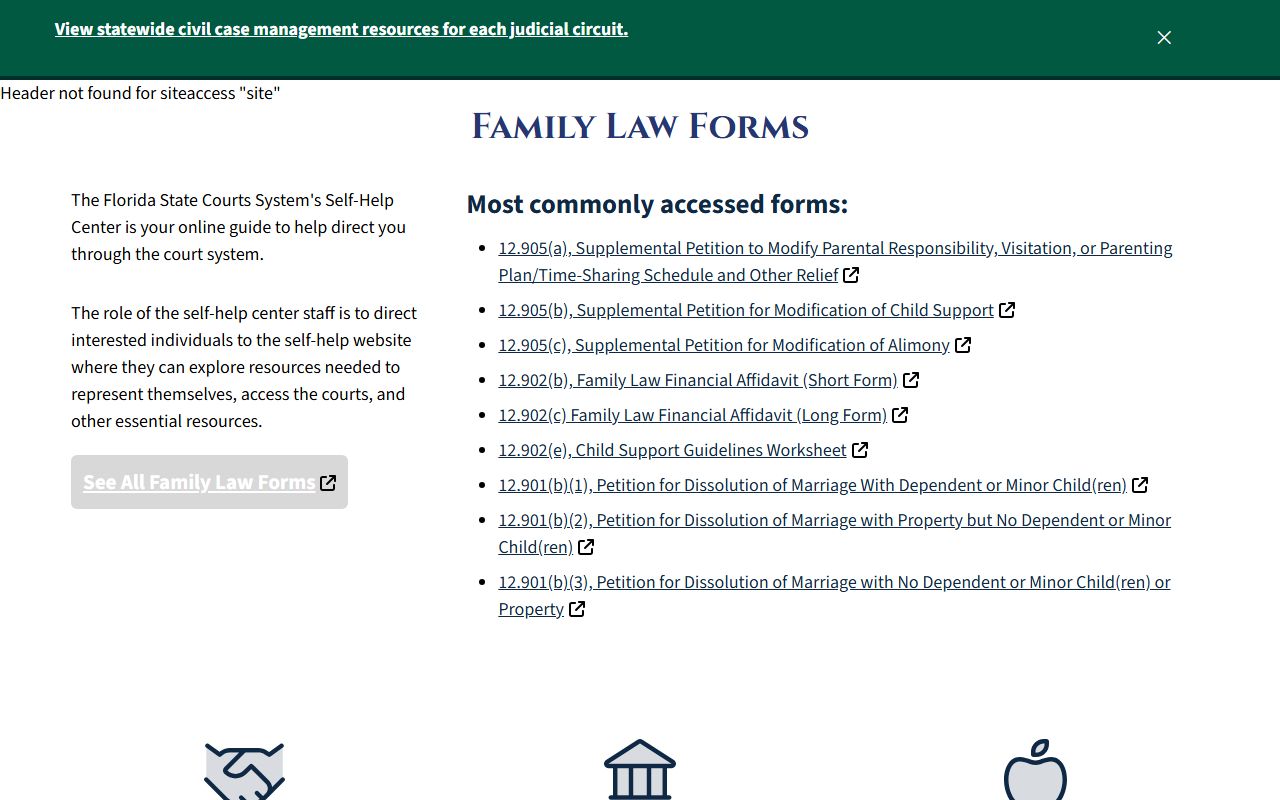
The Florida Courts structure page, shown below from the Florida court structure page, places the county court in the system.
County Court Jurisdiction in Seminole County
The County Court hears a defined set of matters. On the criminal side, it handles misdemeanors and most criminal traffic. On the civil side, it handles small claims, county civil, evictions, and landlord-tenant disputes. Noncriminal traffic infractions also run through the county system. Anything more serious, a felony or a large civil suit, goes up to the Circuit Court.
- Misdemeanors and most criminal traffic offenses.
- Noncriminal traffic infractions and citations.
- Small claims for lower-value disputes.
- County civil claims within the statutory limit.
- Evictions and landlord-tenant matters.
These case types make up the bulk of the Clerk's daily filings, which is why the traffic and county portals are so heavily used by the public.
Small Claims and Civil Limits
The dollar value of a civil case decides which court hears it. The Clerk describes small claims as cases with claims under $8,000. County civil claims run from $8,001 to $49,999. Anything above $50,000 is a circuit civil case. So the same kind of dispute can be a county or a circuit matter depending on the amount at stake.
| Case Type | Claim Amount | Court |
|---|---|---|
| Small Claims | Under $8,000 | County Court |
| County Civil | $8,001 to $49,999 | County Court |
| Circuit Civil | $50,000 and above | Circuit Court |
Small claims are designed to be simpler, so self-represented people can use them. The Clerk assists with small-claims paperwork. The lower filing thresholds also keep the process affordable for everyday disputes.
Misdemeanors and Traffic in County Court
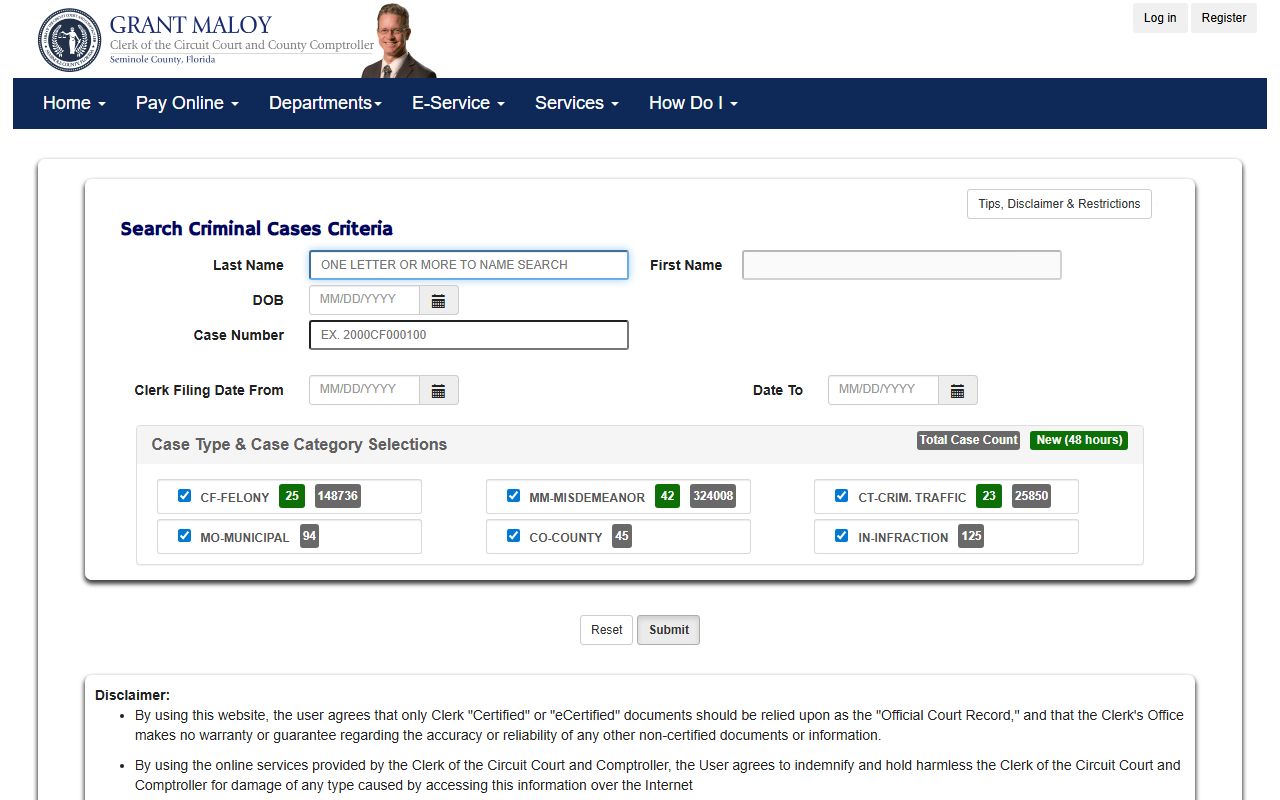
The criminal categories in the Clerk's portal tell you which cases are county-level. MM is a misdemeanor, CT is criminal traffic, CO is county criminal, MO is municipal, and IN is an infraction. All of these are County Court matters. Only the CF felony code routes to the Circuit Court. That single distinction sorts most criminal searches.
The criminal case search, shown below from the Seminole criminal case portal, lets you filter to these county categories.
Evictions and Landlord-Tenant Cases
Evictions are one of the most common county-court filings. A landlord files to recover possession of a rental, and a tenant can respond within the time the law allows. The Clerk's civil portal lists eviction categories, including residential and non-residential evictions, so you can search them by party name or case number. These cases move quickly compared to other civil matters.
Possession and money are separate parts of an eviction. The court can return the property to the landlord while a money claim continues. Reading the docket tells you which part has been decided. For self-represented parties, Florida Courts publishes the eviction forms, and the Clerk accepts filings at its locations or through e-filing.
What County Court Records Show
A county-court file holds the same kind of fields as any case record. The case number carries the year, a division code, and a sequence. The docket lists the filings, hearings, and the disposition. A traffic case adds payment and election history, while a small-claims case shows the claim amount and any judgment.
Because county cases move fast and in volume, online dockets can lag the docket date by several days. The Clerk warns that scanned images start with open cases from 2005, so an older county file may show a docket with no image attached. For an official copy, request a certified record from the Clerk.
County Court Versus Circuit Court
The two courts divide the work by seriousness and value. The County Court is the limited court for smaller matters, and the Circuit Court is the general court for major ones. The chart below shows the split, which decides where a case is filed.
| Point | County Court | Circuit Court |
|---|---|---|
| Criminal | Misdemeanors, criminal traffic | Felonies |
| Civil | Up to $49,999 | $50,000 and above |
| Common cases | Small claims, evictions, traffic | Family, probate, juvenile |
| Appeals | Reviewed by the Circuit Court | Reviewed by a District Court of Appeal |
For the general court, see the Seminole County Circuit Court page. For traffic specifically, see traffic court records.
County Court Locations
County court matters are heard in the same Sanford justice campus as circuit cases. The Criminal Justice Center is the full-service counter during the renovation, and traffic hearings split between Eslinger Way and the downtown courthouse during construction.
Criminal Justice Center
101 Eslinger Way
Sanford, FL 32773
407-665-4300
Mon-Fri 8:00 AM - 4:30 PM
Civil Courthouse (Traffic Hearings)
301 North Park Avenue
Sanford, FL 32771
407-665-4200
Tue-Thu traffic hearings during construction
Check your hearing notice for the right building, since the construction period shifts traffic hearings by day of week.
How to Search Seminole County Court Records
County court records are searched through the Clerk's portals, the same ones used for circuit cases. You pick the portal that matches the case type, then filter to the county categories. The steps below keep it simple.
- Open the Clerk's Search for a Court Case page and choose the criminal, civil, or traffic portal.
- Enter a party name or a case number.
- Filter to county categories such as misdemeanor, county civil, or small claims.
- Add a filing-date range to narrow the list.
- Open the case to read the docket and disposition.
For the full case-search walkthrough, see Seminole County court records.
Self-Help for County Court Cases
County court is where most people go without a lawyer. Small claims, traffic, and evictions are built for self-represented parties. The Clerk links self-help programs, and the Florida Courts Help app offers forms and plain-language guidance for these common cases. Self-represented parties can file at Clerk locations or through the state e-filing portal.
If you cannot afford a filing fee, a civil indigent status application is available. For broader civil legal aid, Community Legal Services of Mid-Florida serves eligible Seminole County residents. These resources keep the county-court process within reach for people handling their own case. Many small claims and traffic matters are resolved without a lawyer at all, which is exactly what the county-court system is built to allow.